
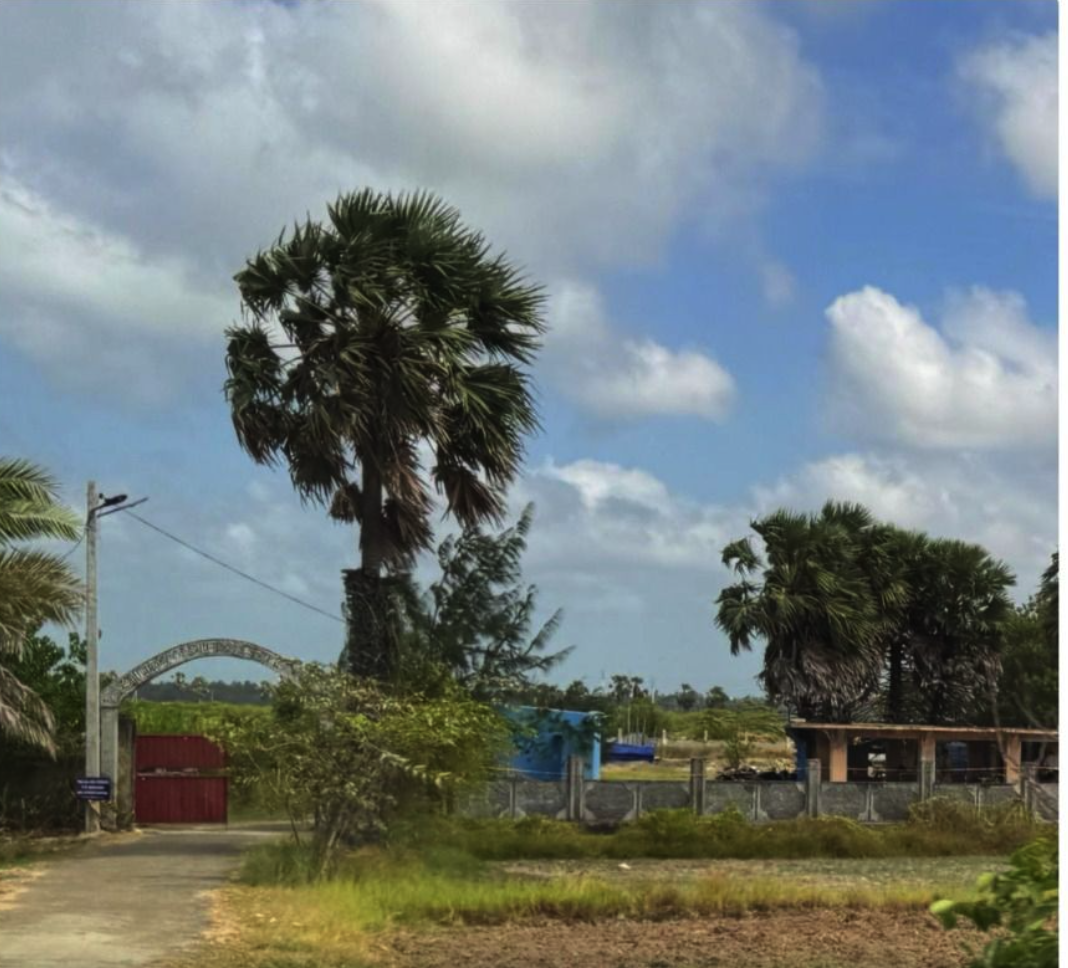
Across the North and East of Sri Lanka, sixteen mass grave sites have been identified in areas heavily affected by war. Fourteen of these are under active investigation, with excavations and legal proceedings being conducted under the supervision of local Magistrates. Among them, the most recent and highly sensitive discovery is the Chemmani Sinthubathi Ariyalai human mass grave, uncovered in February 2025.
The discovery was made on 12 February 2025, when the Nallur Pradesha Sabha began constructing an electric cremation plant at the Ariyalai Cemetery. As the construction team dug into the ground, they uncovered human bone fragments mixed with sand. This immediately raised alarm because the Ariyalai Cemetery is a Hindu cremation site where burials are not practiced. A complaint was lodged at the Jaffna Police Station, and suspicions of foul play were formally recorded.
On 19 February 2025, police reported their findings to the Jaffna Magistrate Court, following site visits and statements from the cemetery maintenance committee. The following day, a judicial inspection took place with the Judicial Medical Officer and police officers. Samples were collected, and by 27 February, an official report confirmed that almost all of the remains were human bones. The JMO recommended a “pit test” to further examine the site.
The first phase of excavation began in mid-May but was delayed by weather. It resumed in early June and continued for nine days, during which nineteen bodies were recovered. Experts noted that the skeletal remains were buried about 1.5 meters below the surface, disorganized, and stripped of clothing or personal artifacts. This indicated deliberate burial and an attempt to erase the identity of the victims. The JMO advised that at least forty-five additional days of excavation would be required and submitted a budget request to the Ministry of Justice.
During this time, the United Nations High Commissioner for Human Rights visited Sri Lanka in June 2025. Families of victims, human rights activists, and lawyers urged him to visit Chemmani. The Sri Lankan government publicly welcomed the visit, but in practice made no effort to facilitate access. Only after persistent legal motions from victims’ lawyers did the court allow the High Commissioner’s visit, albeit with restrictions on participation. Although the High Commissioner pressed for financial approval to continue excavations, the Ministry of Justice delayed the release of funds.
Phase II of excavations began on 26 June 2025 and lasted fifteen days. Thirty-seven complete skeletal remains were cleaned and recorded, bringing the total count at that stage to fifty-six. Drone imagery of the site was taken in the presence of Magistrate A.A. Anandharajah, Professor Raj Somadeva, medical officers, and university experts. During the same period, RPG shell fragments were discovered and removed by the Special Task Force. On 8 July, the excavation areas were officially marked as Trench I and Trench II.
In the second session of Phase II, held between 21 July and 6 August 2025, a further 141 skeletal remains were uncovered. Many artifacts, including items associated with children and adults, were also recovered. On 5 July 2025, more than two hundred people, including families of victims, clergy, civil society representatives, and journalists, attended a public display of the recovered artifacts. Members of the Human Rights Commission, the Office of Missing Persons, and psychological support teams also took part.
Phase III began on 25 August and continued until 6 September 2025, yielding another thirty-seven skeletal remains. By the conclusion of the third phase, a total of 240 skeletal remains had been recovered, of which 239 were preserved and handed over to the court.
On 18 September 2025, the Jaffna Magistrate Court reviewed the JMO’s latest budget submission and set 21 October as the expected date for further excavations, subject to budget approval. The case was scheduled to be called again on 1 October to monitor progress on funding.
The Chemmani Ariyalai site has now produced 240 confirmed human skeletal remains, with evidence strongly suggesting mass killings and deliberate concealment. Despite the involvement of the United Nations and continued pressure from victims’ families, government delays in approving excavation funds remain a major obstacle to uncovering the full truth and delivering justice.