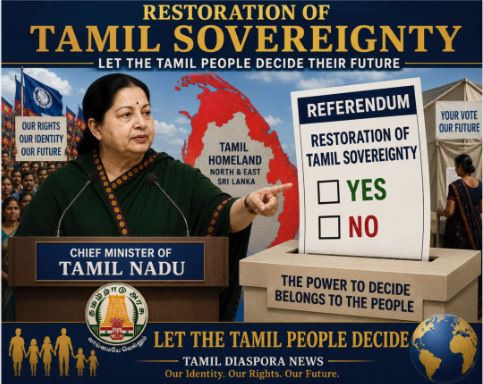
J. Jayalalithaa’s 2013 push for a UN-backed Tamil Eelam referendum remains a defining moment in Tamil geopolitics, challenging New Delhi’s traditional foreign policy by demanding global self-determination for both domestic and diaspora Sri Lankan Tamils.
Core Rationale: Why She Advocated for the Referendum
▪ Post-2009 Humanitarian Crisis: She cited the systemic slaughter and displacement of Tamil civilians during the final stages of the civil war.
▪ Demand for Accountability: She insisted that true reconciliation was impossible without an international investigation into alleged war crimes.
▪ Democratic Self-Determination: She argued that the political future of the Tamil people must be decided by the people themselves, not dictated by states.
▪ Rejection of Status Quo: She declared existing frameworks—like the 13th Amendment—entirely inadequate to resolve deep-seated Tamil grievances.
Structural Framework of the 2013 Proposal
▪ Assembly Resolution: The Tamil Nadu Legislative Assembly unanimously adopted the historic resolution on March 27, 2013.
▪ Transnational Electorate: The proposed referendum uniquely included Sri Lankan Tamils within the island and the global diaspora.
▪ Multilateral Mandate: She urged New Delhi to move a resolution in the UN Security Council to establish a supervised voting process.
▪ Economic Sanctions: The proposal demanded India impose an economic embargo on Sri Lanka until equal rights and accountability were established.
Geopolitical Legacy and Research Implications
▪ Paradiplomacy Model: The move serves as a primary case study of a subnational state government attempting to pivot a country’s sovereign foreign policy.
▪ Diaspora Franchise: By including displaced populations, the framework recognized the Tamil diaspora as legitimate stakeholders in territorial sovereignty.
▪ Democratic Pivot: The rhetoric successfully shifted the Eelam discourse from an armed conflict narrative to a peaceful, democratic self-determination model.
▪ Federal Friction: The resolution highlighted the structural divide between Tamil Nadu’s regional solidarity and New Delhi’s commitment to a unified Sri Lanka.
Thank you,
Tamil Diaspora News,
New York, USA
June 22, 2026