
Tamil Diaspora News Health Awareness
Common Daily Habits That May Increase Colon Cancer Risk
Colon cancer can develop quietly, sometimes without any early warning signs. Many people may feel healthy while precancerous polyps or cancer are already developing.
The good news is that regular screening and healthier daily habits may help reduce the risk.
Here is a simple step-by-step explanation.
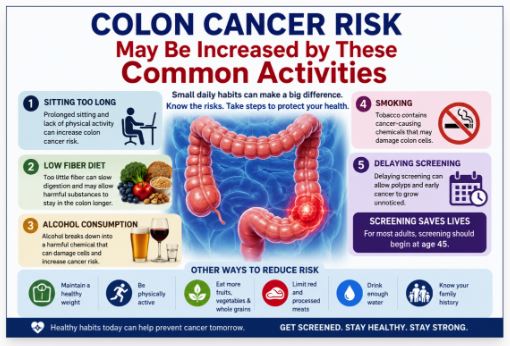
1. Sitting Too Long
Sitting for many hours every day with very little movement may increase colon cancer risk.
Long periods of inactivity can contribute to:
▪ Weight gain
▪ Insulin resistance
▪ Inflammation
▪ Poor overall metabolic health
These conditions may create an unhealthy environment in the body and colon.
What you can do:
Stand up regularly, stretch, walk around the house or office, and try to include daily physical activity.
Adults should generally aim for at least 150 minutes of moderate exercise each week. Even a 30-minute walk on most days can be helpful.
2. Not Eating Enough Fiber
Fiber helps food and waste move through the digestive system.
A low-fiber diet may cause waste to remain in the colon longer, allowing potentially harmful substances to stay in contact with the colon lining.
Fiber also supports healthy gut bacteria and helps produce substances that protect colon cells.
Good sources of fiber include:
▪ Beans and lentils
▪ Vegetables
▪ Fruits
▪ Berries
▪ Whole-grain bread
▪ Brown rice
▪ Oatmeal
▪ Nuts and seeds
Increase fiber gradually and drink enough water to reduce gas or bloating.
3. Drinking Alcohol Regularly
The body converts alcohol into a harmful chemical called acetaldehyde.
This chemical can damage DNA and healthy cells. Regular alcohol consumption has been linked to several cancers, including colorectal cancer.
Heavy drinking carries the greatest risk, but even moderate drinking may increase cancer risk.
What you can do:
Reduce the number of drinks you consume, include alcohol-free days, or stop drinking completely.
The less alcohol you drink, the lower your alcohol-related cancer risk may be.
4. Smoking
Smoking does not only damage the lungs.
Tobacco smoke contains cancer-causing chemicals that travel throughout the body. These chemicals may damage colon cells and increase the development of precancerous polyps.
What you can do:
Stopping smoking is one of the most important steps you can take for your overall health.
Doctors, pharmacists, counseling programs and quit-smoking medications may help.
5. Delaying Colon Cancer Screening
Screening is extremely important because colon cancer may develop without symptoms.
During a colonoscopy, doctors may find and remove polyps before they become cancerous.
For most adults with an average risk, colorectal cancer screening should normally begin at age 45.
Screening options may include:
▪ Colonoscopy
▪ At-home stool tests
▪ Other stool-based tests
▪ Certain blood-based screening tests
The correct test depends on your age, family history, health condition and personal risk.
Speak with your healthcare provider about which test is appropriate for you.
Warning Signs You Should Not Ignore
Contact a doctor if you notice:
▪ Blood in the stool
▪ Rectal bleeding
▪ A continuing change in bowel habits
▪ Unexplained diarrhea or constipation
▪ Ongoing stomach or abdominal pain
▪ Unexplained weight loss
▪ Persistent weakness or tiredness
These symptoms do not always mean cancer, but they should be medically evaluated.
Do not wait simply because you are younger than 45.
Know Your Family History
Tell your doctor if a parent, brother, sister or child has had colon cancer or advanced polyps.
People with a family history may need to begin screening earlier or have screening more frequently.
People with inflammatory bowel disease or certain inherited genetic conditions may also face a higher risk.
Limit Processed and Red Meats
Regularly eating large amounts of processed meat may increase colorectal cancer risk.
Processed meats include:
▪ Bacon
▪ Sausages
▪ Hot dogs
▪ Ham
▪ Salami
▪ Certain packaged deli meats
Try replacing some red and processed meats with:
▪ Beans
▪ Lentils
▪ Fish
▪ Chicken
▪ Vegetables
▪ Whole grains
The Most Important Message
You cannot completely eliminate the possibility of colon cancer through lifestyle changes alone.
However, you may lower your risk by:
▪ Moving more
▪ Sitting less
▪ Eating more fiber
▪ Limiting alcohol
▪ Avoiding tobacco
▪ Reducing processed meat
▪ Maintaining a healthy weight
▪ Getting screened on time
Colon cancer is often easier to treat when it is discovered early. Screening may also prevent cancer by finding and removing certain polyps before they become dangerous.
Do not wait for symptoms. Speak with your doctor about colorectal cancer screening, especially if you are 45 or older or have a family history.
Tamil Diaspora News
Health information is provided for general public awareness and is not a substitute for medical diagnosis or advice from a qualified healthcare professional.