Colombo / Geneva | Press Release
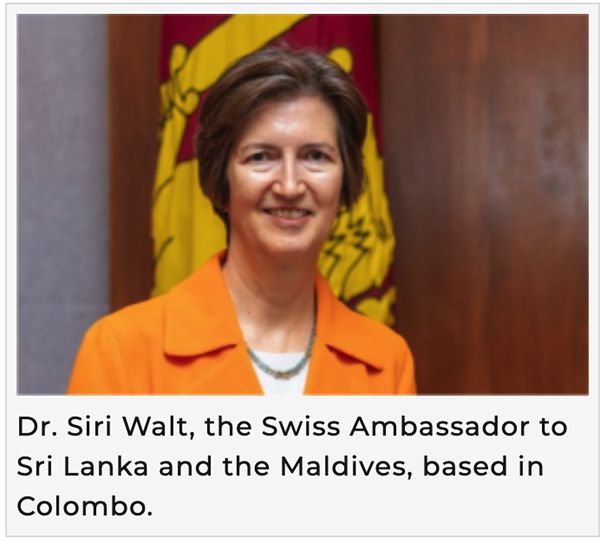
We welcome the initiative taken by the Swiss Embassy to facilitate dialogue among Tamil political parties toward a common position on a political solution for the Tamil people in Sri Lanka. Switzerland’s continued engagement reflects an important sense of international responsibility toward a long-unresolved political conflict.
However, it must be clearly stated that any political solution cannot be pursued in isolation from historical reality and binding principles of international law.
Eelam Existed Before European Colonization
Before European colonization, the island known today as Sri Lanka was not a single, unified nation-state. The Tamil people lived in their historically established homeland, Eelam, with their own political authority, territorial control, language, culture, and civilizational institutions.
During that period:
- Tamil Hinduism and Tamil Buddhism were the indigenous religious traditions of the island.
- There was no Sinhala race, no Sinhala language, and no Mahavamsa-based ethno-religious political ideology as they exist today.
The construction of a Sinhala racial identity, the Sinhala language in its modern political form, and the Mahavamsa-based narrative were later political developments, shaped and institutionalized to serve post-colonial state power. The identity now known as “Sinhala” emerged from this process.
UN Decolonization Law of 1960: Tamil Sovereignty
In 1960, the United Nations General Assembly adopted Resolution 1514 (XV) — the Declaration on the Granting of Independence to Colonial Countries and Peoples. This resolution clearly establishes that:
When a colonial power withdraws, the country must be restored to the political condition that existed at the time of colonization.
At the time Sri Lanka was colonized, Tamil sovereignty existed in the Tamil homeland. Therefore, under international law, the Tamil people are entitled to the restoration of their sovereignty, not merely administrative or constitutional concessions within a centralized state.
International Precedent: Mauritius and Diego Garcia
There is a clear international precedent. Mauritius lost control of the Chagos Archipelago (Diego Garcia) during the colonial period. Applying UN decolonization principles, international legal bodies have affirmed that the territory must be returned to Mauritius.
This precedent demonstrates that colonial injustices are correctable under international law — and that Tamil sovereignty claims fall squarely within accepted decolonization principles.
Our Position
- We welcome Swiss efforts to encourage dialogue and unity among Tamil political actors.
- However, a “political solution” must not be confined to frameworks such as the 13th Amendment, federalism, or the unitary state model.
- Any genuine and lasting solution must be grounded in:
- Historical reality
- International law
- The UN decolonization framework of 1960
- The inherent sovereignty of the Tamil people
- A just and durable solution for the Tamil people cannot be built on internal constitutional rearrangements alone.
It must be based on sovereignty, justice, and international legal legitimacy.
“The Tamil political question is not a request for accommodation —
it is a claim grounded in history and guaranteed by international law.”