Spider veins and varicose veins are common vein problems that affect many people, especially as they get older. Although they may sometimes appear to be only a cosmetic concern, they can also cause pain, swelling, skin changes, and other health complications. This health awareness post explains what they are, why they occur, why they should not be ignored, and what treatment options are available.
Health Awareness: Understanding Spider Veins and Varicose Veins — Causes, Risks, and Treatments
Spider veins and varicose veins are common vein problems that affect many adults, especially as people get older. They are often seen on the legs, ankles, or face. While some people may think they are only a cosmetic issue, varicose veins can sometimes cause pain, swelling, skin changes, and other health problems if ignored.
What Are Spider Veins?
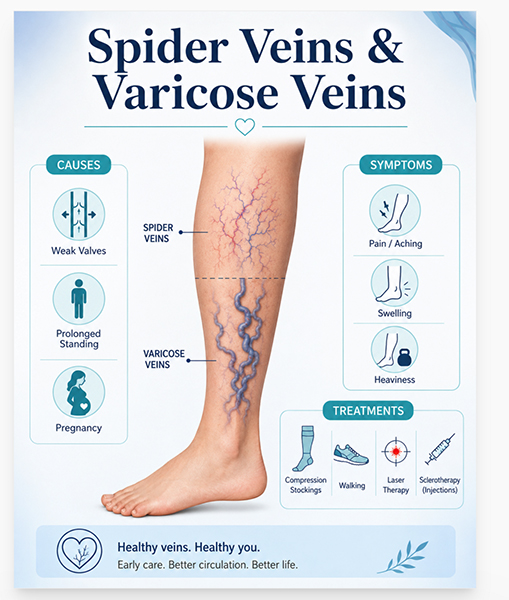
Spider veins are small red, blue, or purple blood vessels that can be seen through the skin. They often look like thin lines, branches, or a spider web. They are usually found on the legs or face.
What Are Varicose Veins?
Varicose veins are larger veins that become swollen, twisted, and raised. They may look like blue or purple cords under the skin. They are most common in the legs and ankles.
What Causes Spider Veins and Varicose Veins?
Healthy veins carry blood back to the heart. Inside the veins are one-way valves that help blood move in the correct direction. When these valves become weak or damaged, blood can flow backward and collect inside the vein. This causes pressure to build up, making the vein stretch, bulge, and twist.
Common causes and risk factors include aging, family history, pregnancy, obesity, standing for long hours, sitting for long hours, leg injury, previous surgery, and lack of regular exercise.
Why Are They Not Good?
Spider veins are often mainly a cosmetic concern. However, varicose veins may cause discomfort and health problems. Symptoms may include aching, heaviness, burning, throbbing, itching, swelling, leg cramps, and tired legs.
In more serious cases, varicose veins may lead to skin discoloration, inflammation, bleeding, open sores near the ankles, or painful blood clots. Anyone with severe pain, sudden swelling, bleeding, wounds, or skin color changes should speak with a doctor.
Treatment Options for Spider Veins and Varicose Veins
Treatment depends on the size of the veins, symptoms, and medical advice. Some people may need simple lifestyle changes, while others may need medical treatment.
1. Compression Stockings
Compression stockings gently squeeze the legs and help blood flow upward toward the heart.
Highlights:
• Helps reduce swelling
• Helps relieve aching and heaviness
• Useful for people who stand or sit for long periods
• Simple, non-surgical treatment
2. Regular Walking and Exercise
Walking helps the leg muscles push blood back to the heart and improves circulation.
Highlights:
• Improves blood flow
• Strengthens leg muscles
• Helps prevent veins from getting worse
• Supports healthy body weight
3. Leg Elevation
Raising the legs above heart level can reduce pressure in the leg veins.
Highlights:
• Helps blood move back toward the heart
• Reduces ankle and leg swelling
• Relieves heavy and tired legs
• Easy home care method
4. Weight Control and Healthy Diet
Extra weight can increase pressure on the leg veins. A healthy diet and weight control can help reduce this pressure.
Highlights:
• Reduces strain on veins
• Supports better circulation
• Low-salt foods may reduce swelling
• Helps overall heart and vein health
5. Sclerotherapy
Sclerotherapy is commonly used for spider veins and small varicose veins. A doctor injects a special solution into the vein, causing it to close and fade over time.
Highlights:
• Common treatment for spider veins
• Usually done in a doctor’s office
• Does not usually require surgery
• Blood reroutes through healthier veins
6. Laser Treatment
Laser treatment uses light energy and heat to close small spider veins or small varicose veins.
Highlights:
• Often used for small visible veins
• May be used for facial spider veins
• No cutting is required
• More than one treatment may be needed
7. Endovenous Laser Treatment
This treatment is used for larger varicose veins. A small laser fiber is placed inside the vein, and heat closes the vein from the inside.
Highlights:
• Less invasive than older surgery
• Used for larger varicose veins
• Usually faster recovery
• Helps blood flow through healthier veins
8. Radiofrequency Ablation
Radiofrequency ablation uses heat energy to close larger damaged veins. It works similarly to endovenous laser treatment.
Highlights:
• Minimally invasive
• Often used for larger varicose veins
• Less pain than traditional surgery
• Usually done as an outpatient procedure
9. Vein Removal or Surgery
For severe varicose veins, doctors may remove or tie off the damaged vein. Today, many procedures are done through small incisions.
Highlights:
• Used for large or severe veins
• May help when other treatments do not work
• Can reduce pain and swelling
• Doctor decides if surgery is necessary
Prevention Tips
Regular walking, exercise, weight control, avoiding long periods of standing or sitting, stretching the legs, and elevating the legs can help improve circulation and reduce the chance of spider veins and varicose veins getting worse.
Important Message
Spider veins and varicose veins are common, but they should not be ignored when they cause pain, swelling, skin changes, bleeding, or wounds. Early care can help reduce discomfort and prevent future complications. Anyone with serious symptoms should consult a qualified medical professional.
***
Thank you,
Tamil Diaspora News,
June 2, 2026