US Tamil Diaspora Highlights Global Lessons on Sovereignty, Urges Strategic Alignment with Democratic Powers
Historical precedents show alliances—not isolation—determine outcomes for stateless nations
March 18, 2026
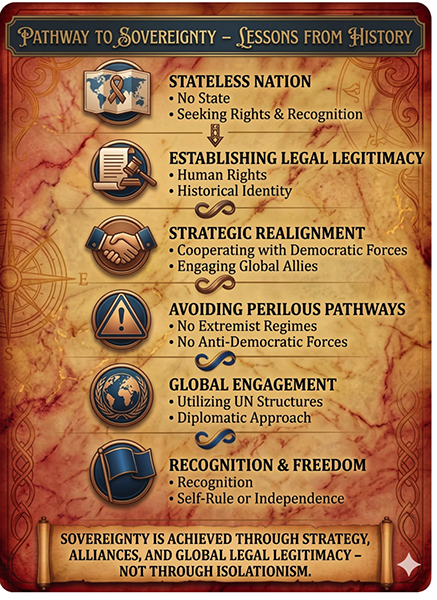
The US Tamil Diaspora today emphasized that the path to sovereignty for stateless nations has historically depended on strategic international alignment, diplomatic engagement, and global legitimacy, rather than isolation or reactive political positioning.
Drawing on global precedents, the organization noted that movements in regions such as Kosovo, East Timor, South Sudan, and Kurdistan demonstrate a consistent pattern: constructive engagement with democratic powers and international institutions plays a decisive role in shaping political outcomes.
“History provides clear evidence that stateless nations do not achieve recognition by distancing themselves from global powers,” the statement said. “Strategic alliances, particularly with democratic nations, are essential for advancing political rights and self-determination.”
The Diaspora highlighted that Kosovo’s independence was significantly influenced by Western support, while East Timor’s statehood emerged through sustained engagement with the United Nations and allied democracies. Similarly, South Sudan’s independence was shaped by strong diplomatic backing from the United States.
According to the statement, these examples underscore the importance of international perception, credibility, and alignment in determining the success of national movements.
The organization also noted that in an increasingly interconnected and data-driven world, public political positioning can influence how movements are perceived by global actors, including governments that play key roles in diplomacy, development, and international decision-making.
“Global systems today are highly structured and responsive to geopolitical alignment,” the statement added. “Public narratives and political messaging are not isolated—they are part of a broader international evaluation.”
The US Tamil Diaspora reiterated that engagement with democratic institutions does not equate to endorsing conflict, but rather reflects a strategic understanding of how global systems function.
Looking ahead, the organization emphasized that discussions on Tamil political aspirations, including sovereignty and self-determination, must be grounded in long-term strategic thinking, international cooperation, and alignment with principles recognized by the global community, including those reflected in the 1960 United Nations decolonization framework.
“Successful movements have demonstrated that diplomacy, consistency, and strategic alliances are critical,” the statement concluded. “The lessons of history are clear: the path to sovereignty is shaped not only by internal aspirations, but by how effectively those aspirations are positioned on the global stage.”