
Ancient Inscription Confirms the Use of “Eelam” in Sri Lanka Over 2,000 Years Ago
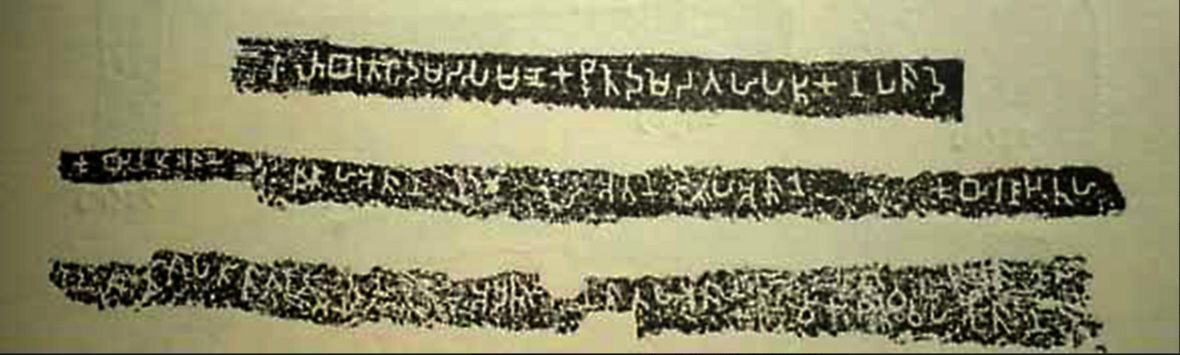
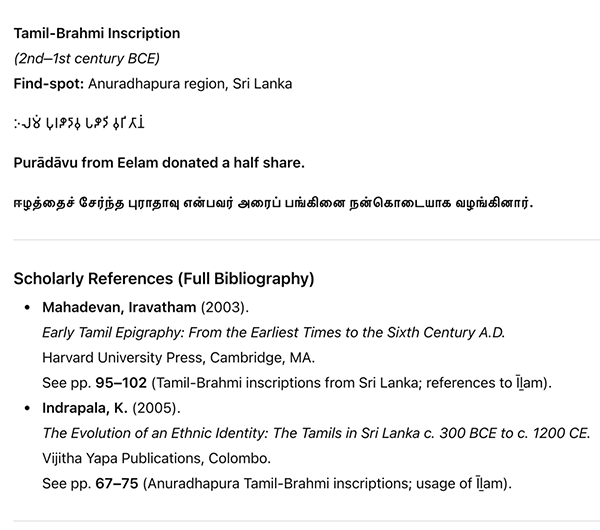
An ancient stone inscription written in Tamil-Brahmi script, dated to approximately 2nd–1st century BCE, provides direct archaeological evidence that the term “Īḻam (Eelam)” was in practical use in Sri Lanka more than two millennia ago.
The inscription, discovered in the Anuradhapura region, records a routine donation made by an individual identified as being from “Īḻam.” Far from being symbolic or political, the text functions as a simple donor record, comparable to a modern plaque stating, “Donated by a person from ___.”
Scholars have identified the script as Tamil-Brahmi, an early form of Tamil writing used in South India and Sri Lanka during the Early Historic period. The presence of the word Īḻam in this inscription confirms that the term was a normal geographic identifier, used in everyday life to describe a place or homeland.
Importantly, this evidence predates medieval chronicles and later historical narratives. It demonstrates that “Eelam” was not a modern invention, but an established term in ancient Tamil usage, employed casually and practically by people who lived, traded, and donated within Sri Lanka itself.
The inscription does not describe a kingdom, conflict, or ideology. Instead, it documents ordinary civic and religious activity, reinforcing that Tamil-speaking communities were integrated participants in the island’s social and economic life during the early centuries BCE.
Historians note that such inscriptions are legally and socially significant, as stone records were used to permanently acknowledge donations, ownership, and merit. As such, this inscription serves as concrete archaeological proof of the historical use of the name Īḻam (Eelam) within Sri Lanka.